Hurricane Season Pest Proofing for Corpus Christi Homes
Storms relocate pests wholesale: upward, inward and into the driest structure on the street - yours.
Read the Guide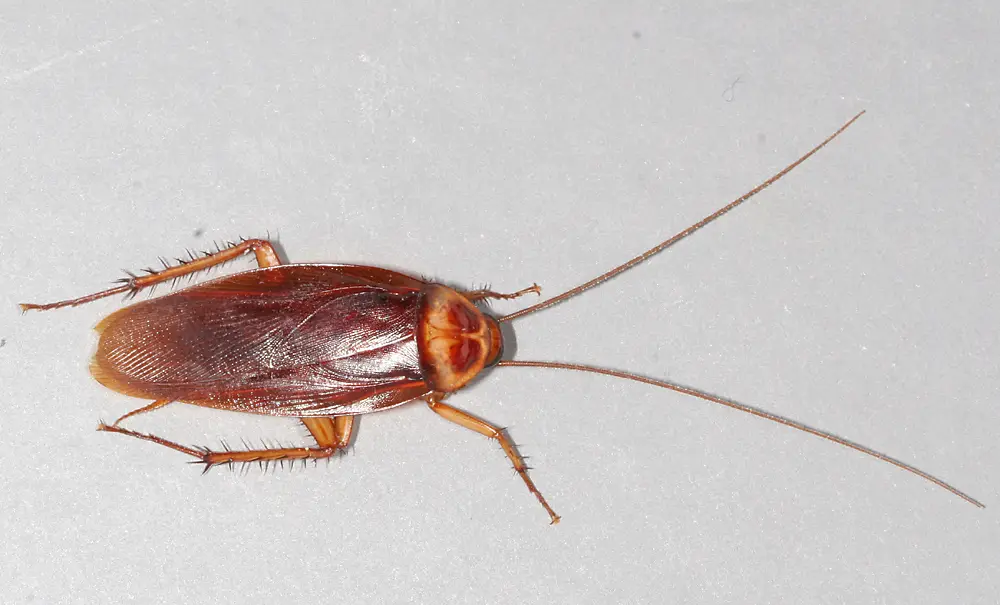
Palmetto bug floods after rain, in drains and at porch lights all summer.
Problem: Palmetto bug floods after rain, in drains and at porch lights all summer.
Solution: Keep the population outside: control the yard harborage, screen the crossings, service the drains.
When to call: Call when you find them daily, find a German cockroach cluster, or the outdoor pressure defeats the seals.
Every Corpus Christi summer has the same scene: a warm night, a porch light, and a two-inch roach flying at the glass with the subtlety of a thrown brick. Locals call them palmetto bugs or waterbugs; the entomologists call them American and smokybrown cockroaches. What they are not is the German cockroach of kitchen infestations - and knowing the difference changes everything about how you handle them.
Palmetto bugs are outdoor insects that wander indoors. They breed in the sewer and drain lines, the palm crowns, the leaf litter and the compost edges of the Coastal Bend, and they enter houses hunting water, food scraps or dry shelter from a storm. You do not eradicate a city's outdoor roach population from one kitchen - you make your house a bad destination and your yard a poor nursery.
Corpus Christi sits on the western Gulf of Mexico where the bay meets the brush country, and its climate writes the pest calendar: long, hot, humid summers, winters so mild that most pests never fully stop, and rain that arrives in tropical downpours instead of gentle weeks. Nothing here gets a killing freeze most years, so pest populations build on each other season after season.
Size and attitude give the palmetto away: an inch and a half to two inches, reddish-brown, wings that work, and a solo lifestyle - you see one, not a crowd. The American cockroach wears a pale figure-eight pattern behind its head; the smokybrown is a uniform mahogany. Both live outdoors by preference and tolerate indoor visits. Neither infests a kitchen the way its small cousin does.
The German cockroach is the opposite on every axis: half an inch, tan with two dark stripes, wingless in practice, and never alone. Finding one German means an indoor breeding population in a warm appliance void or cabinet hinge - a professional problem with a professional price of admission. Misidentifying the two is the most expensive roach mistake in Corpus Christi: palmetto effort spent on Germans fails, and German panic spent on a palmetto is wasted.
Follow the water and the litter. Sewer cleanouts and storm drains are the city's palmetto highways - the insects graze the biofilm and climb the laterals, which is why they surface through drains and why floods flush them upward in numbers. Above ground, the nurseries are palm crowns and dead fronds, oak leaf litter, mulch beds kept deep and wet, compost, woodpiles and the undisturbed clutter under decks and porches.
The trees matter more than most homeowners expect. A mature palm is a roach condominium - dozens sheltering in the frond bases, raining frass and occasionally residents into the yard below. Palms overhanging the roof deliver palmettos directly to the eaves. The tree does not have to go, but its crown needs trimming and the roofline needs an air gap.


The indoor palmetto is usually a refugee or a commuter. Commuters enter nightly through gaps - weep holes, pipe penetrations, worn door sweeps, attic vents - following porch light and food odor, then die of homesickness in a corner by morning. Refugees arrive in waves when their habitat floods: a tropical downpour fills the drains and litter, and everything with legs heads uphill, which in a slab neighborhood means into garages, walls and houses.
Air conditioning writes the other invitation. Condensate lines and cool, humid voids make Texas houses the most reliably watered cave in the neighborhood during a dry spell. The palmetto at the bathroom drain in August is following the same map as the one at the porch light in June - moisture, shelter, food - just from a different starting point.
Work from the nursery outward. Trim palm crowns and cut the roofline bridges. Thin the mulch, rake the litter against the walls, move the woodpile and the compost to the far fence. Clean the drains - a serviced drain line with intact traps and caps is a closed highway. Then seal the crossings: screens on drains and vents, escutcheons and foam-and-mesh at the pipes, sweeps on the doors, attic vent screening intact.
The finishing layer is pressure management: a summer service rhythm that keeps the perimeter and the harborage map unfavorable, porch bulbs switched to warm spectrum, and the indoor water map tightened. Homes that do the yard and the seals find the odd wanderer still arrives - the city supplies a few - but 'a few all summer' and 'one every night' are the difference between a house that is defended and a house that is habitat.
The honest risk assessment is short: palmetto bugs do not bite, do not infest food stores the way pantry pests do, and are not disease vectors in the dramatic sense. What they are is filth commuters - an insect that walked a drain or a dumpster can walk a counter, and the mechanical transfer of bacteria on feet and bodies is a real, if modest, contamination route. That is the case for exclusion, calmly made: not fear, just hygiene with a door policy.
The less modest risk is allergy. Cockroach allergens - from shed skins, droppings and body fragments - are established asthma triggers, and outdoor species contribute when they regularly die indoors in numbers. Homes with asthmatic children, in particular, have a medical reason beyond the shudder factor to keep the indoor body count near zero, and to vacuum the corners where the wanderers expire.
Spring wakes the population; the first warm rains bring the year's first flights to the porch lights, and the smart homeowner does the yard and seal pass in March rather than meeting the season unprepared. Summer is peak everything - breeding in the drains and litter, nightly commutes, flood flushes with every tropical system. Palmetto pressure in July is not a failure of your program; it is the city's baseline, and defended houses feel it as a few sightings rather than a cohabitation.
Fall sends the wanderers looking for winter harborage, which makes September and October the exclusion season that matters most: every gap sealed in fall is a dozen spring residents denied. Winter quiets the outdoors activity but not the drain population - the sewer runs warm all year, which is why mid-winter sightings in bathrooms trace to plumbing, not weather.
Cockroach control turns on a single diagnostic question: where is the population centered? German cockroaches answer 'inside, in the warm wet voids near food,' and the job becomes harborage-by-harborage detail work - baits in hinges and appliance voids, cracks sealed, sanitation tightened. Palmetto bugs and smokybrowns answer 'outside, in the drains, palms and litter,' and the job becomes a perimeter, drainage and exclusion project. The same sighting, two different professions.
That is the service side of this guide's problem. When you are ready, the Cockroach Control page carries the process, the coverage by neighborhood and the number to call.
Size, color, alone or in company.
Palms, litter, mulch, drains, woodpiles and under-deck clutter.
Drains, vents, pipe penetrations, door sweeps, weep holes.
Yard work done, water map tight, service scheduled for the warm months.
Are the crowns trimmed, fronds off the roof, seed pods cleared this season?
Caps on cleanouts, screens intact, traps wet in every fixture?
Mulch thin, litter raked off the foundation line, woodpile relocated?
Door sweeps, weep holes, pipe entries and vents screened and sealed?
Porch bulbs warm-spectrum for the flight season?
Palmetto work scopes by pressure and habitat: the size of the yard's nursery map (palms, litter fields, drain condition), the number of crossings the envelope offers, and whether the sightings are commuters or something smaller and worse in the kitchen voids. A defended house on a seasonal rhythm is a modest program; a waterfront property with mature palms and a neglected drain line is a project first and a program second.
Professionals earn their place on palmetto work in the drains and the nursery map: sewer and cleanout service, gel baits placed in the harborage voids you cannot reach, and a perimeter rhythm tuned to the pressure your street actually carries. The visit also settles the question homeowners most often get wrong alone - commuter palmettos versus a breeding German population - before money is spent treating the wrong insect.
The population is in the drains, palms and litter; indoor fog clears the room for an evening and the commute resumes by Friday.
A capped, screened, healthy drain line is the fix; seal a roach population's favorite highway open and the pressure just finds the next gap.
It is a palmetto nursery with a landscaping name. Thin it, dry it, move it off the line.
Every frond bridge is a delivery route. The crown is part of the pest job, not just the tree bill.
The palmetto bug is not a verdict on your housekeeping; it is the local fauna testing your envelope. Corpus Christi will always have them by the million - in the drains, the palms and the warm night air. Your house simply has to be the address where the testing fails: nurseries thinned, crossings screened, lights cooled, water mapped. Do that, and the summer's biggest roaches go back to being what they were for a century of coastal life - something you watch from behind glass, unbothered, while the geckos handle the porch.
Storms relocate pests wholesale: upward, inward and into the driest structure on the street - yours.
Read the GuideRoof rats commute from palms and oaks into attics along branches, wires and fences - an aerial problem with an aerial solution.
Read the GuideNot particularly. They do not bite, and they are more contaminant than threat - an insect that grazed a drain should not walk across a cutting board, which is the whole argument for keeping them outside. The bigger deal is allergenic: heavy cockroach presence of any species aggravates asthma, one more reason the indoor population should stay near zero.
They are not aiming at you; their flight is clumsy, light-guided and mostly downhill. A palmetto launched from a palm or a wall steers badly and lands on whatever interrupts it. Porch lights draw them to the door zone, which manufactures the encounters.
From a Corpus Christi yard, no - and nobody honest promises it. The realistic target is a defended house: nurseries reduced, crossings sealed, pressure managed, and indoor sightings reduced to the occasional lost commuter. That is achievable and it is what good service here actually sells.
Bait placement in harborage is part of professional work; the homeowner version worth your money is mechanical - caps, screens and trap maintenance. Roaches in a serviced, sealed drain line have nowhere good to live. Chemistry without the drain audit is a subscription to the same problem.
When the roaches are small, tan, striped and multiplying in the kitchen voids - or when 'palmettos' keep appearing in one warm appliance area regardless of weather. That pattern is an indoor breeder, and it deserves a cockroach service call, not a yard plan.
One call connects you with a pest control professional serving Corpus Christi and the Coastal Bend - inspection, treatment, exclusion and prevention.
📞 Call Now