
Ant Control in London Area
Ant Control for London Area homes - local conditions, a clear process, and one call to get it started.
There is a reason this page exists separately from the Corpus Christi one: London Area runs its own version of every pest problem on the coast.
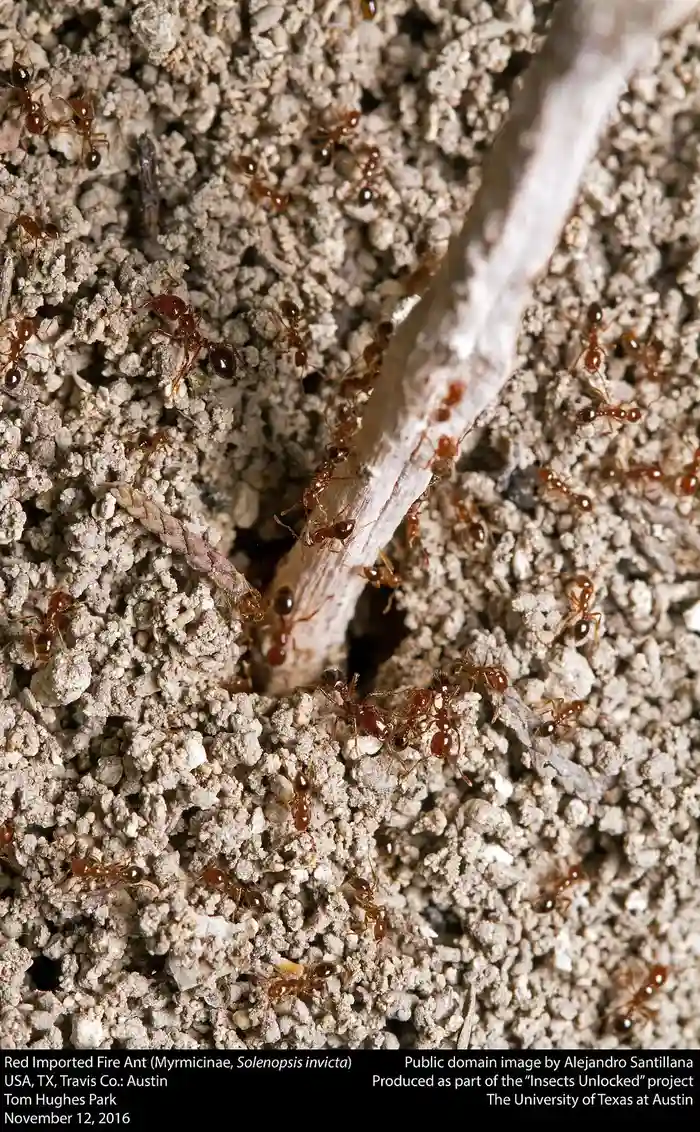
After every rain in London Area, the same morning-after evidence appears: fresh fire ant mounds across the lawn, trails at the foundation, and a new line at the pet bowl. Ant control here is a standing rhythm, not an event.
London is the rural community southeast of Corpus Christi along the farm roads - a school-centered crossroads of homes, acreage and farmland that still lives on a country calendar inside the city service map.
No two Corpus Christi neighborhoods run the same pest pattern. Rural homes on acreage, farmhouses and small subdivisions with outbuildings, wells and septic systems - and that shapes the pest work directly. Field rodents, fire ants and scorpions run the acreage, and mosquitoes breed in every stock tank and low spot after rain. For ant control in London Area, colony-level baiting is what ends the trail cycle in homes like these.
Signs London Area Homes Need Ant Control
Stings in the yard
Painful stings with white pustules after stepping in grass settle the identification: fire ants, defending a mound you did not see.
Ants in electrical boxes
Crazy ants and fire ants both invade AC units, well pumps and meter boxes, where their numbers short equipment - a genuine coastal hazard.
Trails that never end
Ant trails that re-form within days of spraying suggest a colony network - or crazy ants, whose numbers overwhelm trail-level efforts.
Why This Problem Runs in London Area
Tawny crazy ants are the coast's rising problem: enormous, multi-queen populations that blanket landscaping, mulch and leaf litter, trail in chaotic sheets rather than lines, and famously pile into electrical equipment. They do not sting; they overwhelm - and they displace fire ants where they establish.
Field rodents, fire ants and scorpions run the acreage, and mosquitoes breed in every stock tank and low spot after rain. Termites work the older farmhouses, and wildlife - raccoons, opossums, armadillos - treats outbuildings as housing.
In London Area, that plays out street by street - and the outdoor network, not the indoor trail, is where the result is decided. In London Area, the tell is usually at the edges - fence lines, meter boxes, the last row of houses before the marsh or the brush.
Deep summer rearranges the pest map weekly. Heat and humidity push palmetto bugs up the drains at night, ants trail along every water line, and mosquitoes own the calm evenings near the water. It is the season of small disciplines with outsized returns: lids on trash, drips repaired within days, pet water refreshed, gutters cleared after every storm - and service visits that never slip, because in July and August a two-week gap is an open border.
If pets or kids are in the picture, say so when you book. The plan adjusts - product placement, room order, re-entry timing - and it adjusts most easily before the truck rolls. The same goes for aquariums, beehives, gardens in season and any room that must stay sealed or stay open. Details given early are easy; details discovered on site cost a second visit.
The turning season rearranges harborage in London Area: what sheltered pests outdoors in the last season pushes them toward foundations, vents and rooflines in this one.
If the problem involves the attic or crawl space, check that the access panels actually open. Painted-shut hatches and blocked crawl doors are the most common reason a first visit in Corpus Christi ends with a second one scheduled.

How Ant Control Works in London Area
The full step-by-step process for this service - inspection, treatment, sealing and follow-up - is laid out on the main Ant Control page. In London Area the same sequence runs with the local map in hand: the entry points around the rural London community and its schools, southeast of the city, the housing pattern described above, and the pest pressure this neighborhood actually carries. The service overview is at the Ant Control page.
The London Area Angle
Ask anyone who services London Area and they will tell you the pattern repeats: pressure builds at the edges, then follows water and shelter toward the houses. Construction here decides the entry map. Rural homes on acreage, farmhouses and small subdivisions with outbuildings, wells and septic systems.
The creatures complete the picture. Field rodents, fire ants and scorpions run the acreage, and mosquitoes breed in every stock tank and low spot after rain. Termites work the older farmhouses, and wildlife - raccoons, opossums, armadillos - treats outbuildings as housing. A proper ant control call in London Area therefore starts with reading - the water, the entries, the evidence - and only then moves to treatment.
London Area does not sit alone on the map. It trades pest pressure daily with Southeast Corpus Christi, King's Crossing and Flour Bluff - the same creeks, corridors and commutes connect them, and the same seasonal pushes move through all of them within the same few weeks. The neighborhoods lean on each other here: pressure relieved in one is pressure reduced in all of them.
On the route map, London Area sits in the coastal bend community group, ZIP 78417 - close enough to Southeast Corpus Christi, King's Crossing that crews work them on the same runs. The run is planned as a loop, not a line - houses on the same blocks share findings, and a gap found on one street re-opens the checklist for the next. The route view is also the honest one: it is how the pressure actually moves through London Area across a season.
Ask for the London Area dossier and it starts with geography: ZIP 78417, the rural London community and its schools, southeast of the city as the anchor point, and a working border shared with Southeast Corpus Christi, King's Crossing, Flour Bluff, Saratoga Area. As a coastal bend community area, its housing age and water pattern write the first draft of every pest plan.
Prevention That Helps in London Area
- Keep firewood and stored lumber off the ground and away from walls.
- Treat new mounds early, while the colony is small and shallow.
- Seal pipe, wire and conduit penetrations with caulk and copper mesh.
Rural homes on acreage, farmhouses and small subdivisions with outbuildings, wells and septic systems.
Keep Exploring
Ant Control nearby:
- Ant Control in Southeast Corpus Christi
- Ant Control in King's Crossing
- Ant Control in Flour Bluff
- Ant Control in Saratoga Area
More services in London Area:
- Pest Control in London Area
- Wildlife Removal in London Area
- Termite Inspection in London Area
- Commercial Pest Control in London Area
See the full pest control page for London Area and the Ant Control overview for Corpus Christi.
Ant Control in London Area - Questions
Why do fire ants in London Area come back after treatment?
Because the yard is an open system: rain floats in new colonies, queens fly in on mating swarms, and a missed satellite mound reseeds the lawn. A seasonal yard rhythm - not a single treatment - is what keeps mound counts near zero.
Why did spraying make my London Area kitchen ants worse?
If they are pharaoh ants, repellent spray is the known trigger for budding - the colony splits into several new nests in new walls. Indoor ant work on this coast is baiting work for exactly that reason.
How is Ant Control priced for a home in London Area?
By the finding, not the address: what the inspection confirms, how much of the home is involved, and what the sealing or follow-up list looks like. You approve the scope and the number before any work begins, and the written quote is the number the work follows.
Palmetto Bugs After the Rain, Scratches in the Attic or Bites in the Night?
One call connects you with a pest control professional serving Corpus Christi and the Coastal Bend - inspection, treatment, exclusion and prevention.
📞 Call Now