
Bee Removal in Portland
Bee Removal for Portland homes - local conditions, a clear process, and one call to get it started.
Start where the problem starts in Portland: outdoors, at the water and the gaps, in the blocks around Sunset Lake and the Portland bayfront.
A honey bee colony in Portland is not an infestation to spray; it is a livestock operation of tens of thousands of bees living in your wall, water meter box or oak tree - with honey, comb and a defensive perimeter. Removal is a extraction job, and on this coast it is complicated by Africanized genetics in the feral population.
Portland is the fast-growing bayfront city across the harbor from downtown - subdivisions and schools on the bluff above Corpus Christi Bay, with Sunset Lake Park on its shore and wide-open views across the bay.
The details of the neighborhood matter for this work. Established and brand-new subdivisions, bayfront homes and growing apartment stock - and that shapes the pest work directly. Salt-marsh mosquitoes come off the bay flats on calm nights, and new subdivisions at the field edge meet fire ants and field rodents. For bee removal in Portland, live removal with the comb out is what keeps the next colony - and the roaches after it - away.
Signs Portland Homes Need Bee Removal
Dead bees at windows
Bees appearing inside at windows, a few more every day, have found a void route into the house from a colony in the structure.
A swarm cluster on a branch
A football of bees hanging quietly on a limb or fence is a swarm resting between homes - temporary, usually calm, and the simplest removal there is if you call while it lasts.
Honey or wax evidence
Sweet smells, wax flakes, or honey staining and dripping in a wall or ceiling mean comb is established - and removal now includes the comb, not just the bees.
Why This Problem Runs in Portland
Feral South Texas colonies range from gentle to seriously defensive, and you cannot tell by looking at the entrance. Africanized influence raises the defense radius and the pursuit distance, which is why bee work here is professional work with full gear, whatever the colony's mood turns out to be.
Salt-marsh mosquitoes come off the bay flats on calm nights, and new subdivisions at the field edge meet fire ants and field rodents. Palmetto bugs and roof rats run the established neighborhoods, and termites like the irrigated new landscaping.
In Portland, that plays out street by street - and the comb, once out and the void sealed, is what keeps the sequel from ever being written. In Portland, the tell is usually at the edges - fence lines, meter boxes, the last row of houses before the marsh or the brush.
Spring on the Gulf Coast is termite season first: warm nights after rain send subterranean swarmers into the air, fire ant colonies push up fresh mounds, and wasp queens start thumb-sized nests under the eaves. Mosquito season starts with the first standing water. It is the inspection season - the month to find problems while they are small.
What a good visit looks like: the technician arrives with the right equipment for the pest you described, inspects before treating, and treats the source - the colony, the nest, the void, the entry - rather than the symptom you happened to see. Anything that needs a follow-up is scheduled before they leave.
The turning season rearranges harborage in Portland: what sheltered pests outdoors in the last season pushes them toward foundations, vents and rooflines in this one.
Do not spray before the visit. Fresh over-the-counter product scatters evidence, contaminates bait placements and can turn a one-visit diagnosis into two. Photograph what you see instead - a phone photo is the most useful thing you can hand a technician.
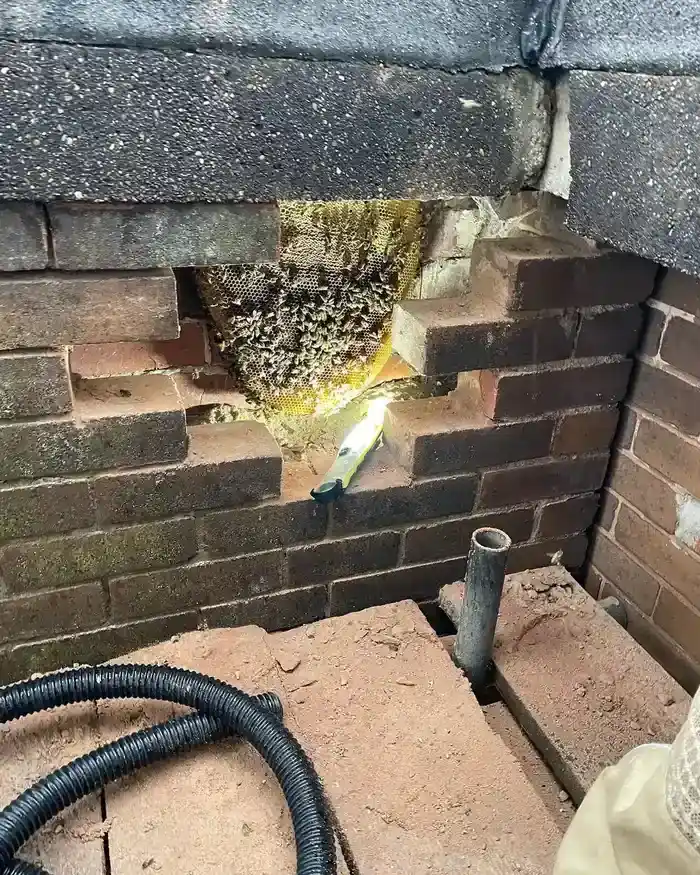

How Bee Removal Works in Portland
The full step-by-step process for this service - inspection, treatment, sealing and follow-up - is laid out on the main Bee Removal page. In Portland the same sequence runs with the local map in hand: the entry points around Sunset Lake and the Portland bayfront, the housing pattern described above, and the pest pressure this neighborhood actually carries. The service overview is at the Bee Removal page.
The Portland Angle
Ask anyone who services Portland and they will tell you the pattern repeats: pressure builds at the edges, then follows water and shelter toward the houses. The inspection route follows the way this area was built. Established and brand-new subdivisions, bayfront homes and growing apartment stock.
What the neighborhood grows, hosts and shelters fills in the rest. Salt-marsh mosquitoes come off the bay flats on calm nights, and new subdivisions at the field edge meet fire ants and field rodents. Palmetto bugs and roof rats run the established neighborhoods, and termites like the irrigated new landscaping. A proper bee removal call in Portland therefore starts with reading - the water, the entries, the evidence - and only then moves to treatment.
Portland does not sit alone on the map. It trades pest pressure daily with Gregory, Ingleside and Aransas Pass - the same creeks, corridors and commutes connect them, and the same seasonal pushes move through all of them within the same few weeks. Read together, these neighborhoods tell one story - and this service is the chapter most of them eventually need.
On the route map, Portland sits in the coastal bend community group, ZIP 78374 - close enough to Gregory, Ingleside that crews work them on the same runs. The run is planned as a loop, not a line - houses on the same blocks share findings, and a gap found on one street re-opens the checklist for the next. The route view is also the honest one: it is how the pressure actually moves through Portland across a season.
Street level, the Portland file reads like this: a coastal bend community part of the map in ZIP 78374, anchored by Sunset Lake and the Portland bayfront, with Gregory, Ingleside, Aransas Pass, North Beach close enough to share crews, weather and pest pressure. The work here is planned from that ground truth, not from a citywide average.
Prevention That Helps in Portland
- Keep water meter and irrigation box lids closed and their gaps screened.
- Seal wall, soffit and eave gaps before spring swarm season.
- If a swarm lands, call the same day; resting swarms are simple pickups for a day or two.
Established and brand-new subdivisions, bayfront homes and growing apartment stock.
Keep Exploring
Bee Removal nearby:
More services in Portland:
- Cockroach Control in Portland
- Emergency Pest Control in Portland
- Rodent Control in Portland
- Commercial Pest Control in Portland
See the full pest control page for Portland and the Bee Removal overview for Corpus Christi.
Bee Removal in Portland - Questions
Are the bees in my Portland wall Africanized?
Possibly, in part. Feral colonies across South Texas carry mixed ancestry, and defensiveness varies colony by colony - which is exactly why assessment comes first and nobody works a colony here without protective gear. Location and behavior on the day tell the technician what the colony is.
How long does bee removal in Portland take?
A resting swarm is an hour. A colony in an accessible box or tree hollow is a few hours. A colony deep in a wall with comb extraction and repair coordination is a day-scale job. The assessment gives you the real number before work starts.
What happens after a Bee Removal visit in Portland?
You get the findings in plain language - what was found, what was treated, what was sealed and what to watch - plus the prevention list for your side and the follow-up timing if the pest's biology calls for one. The goal is a quiet house and no surprises.
Palmetto Bugs After the Rain, Scratches in the Attic or Bites in the Night?
One call connects you with a pest control professional serving Corpus Christi and the Coastal Bend - inspection, treatment, exclusion and prevention.
📞 Call Now