Mosquitoes After Rain in Corpus Christi: The 7-Day Brood Plan
Rain hatches dormant marsh eggs and fills every container in the yard; biting peaks about a week after the storm.
Read the Guide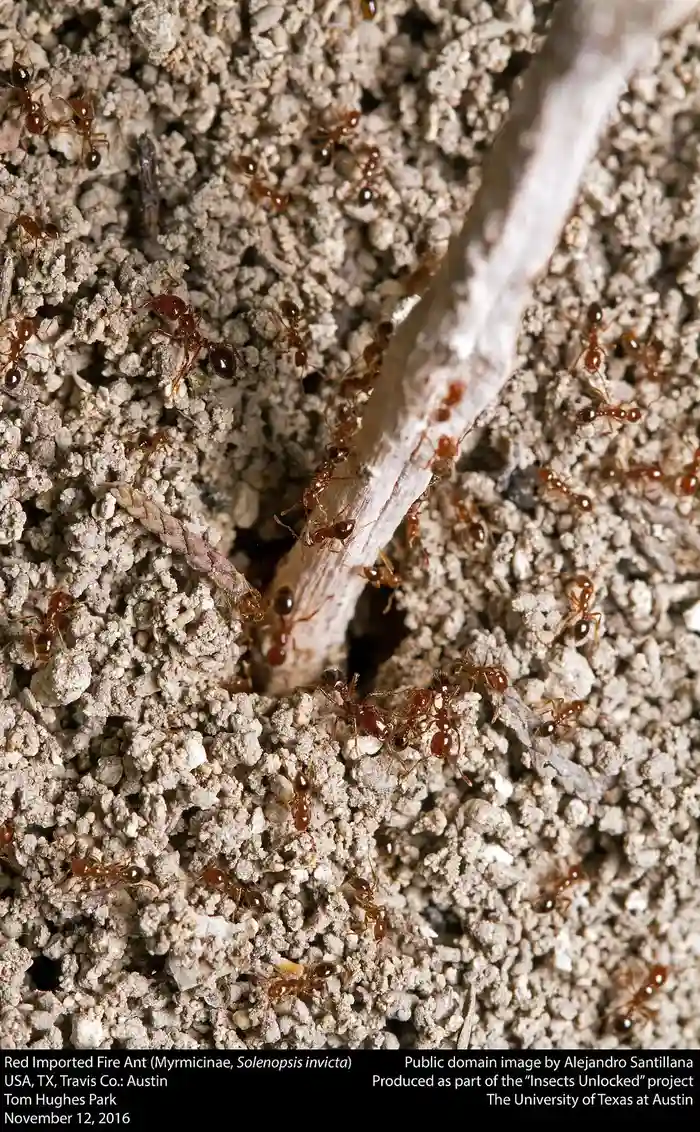
Fire ant mounds are the chimneys of colonies that run deep and wide; surface kills leave the queens untouched.
Problem: Fire ant mounds are the chimneys of colonies that run deep and wide; surface kills leave the queens untouched.
Solution: Bait the colony on its foraging schedule, treat satellite mounds directly, and hold the yard rhythm all warm season.
When to call: Call when mounds reach the play areas and beds faster than you can clear them, or ants flood indoors after storms.
The red imported fire ant did not invade Corpus Christi so much as accept its hospitality. Sunny, irrigated, frequently disturbed ground in a frost-light climate is precisely the habitat the species evolved to colonize, and the Coastal Bend offers it without interruption from October to May. Every yard here is fire ant habitat with a house in it; the only question is the size of the truce you negotiate.
Fire ants also confuse homeowners more than any other ant, because the mound lies. The loose soil chimney is ventilation for a colony that spreads below it in galleries, possibly with multiple queens, possibly budded into satellites across the lawn. Treating the chimney is painting the smokestack. What follows is the colony-level way to think, and work.
Corpus Christi sits on the western Gulf of Mexico where the bay meets the brush country, and its climate writes the pest calendar: long, hot, humid summers, winters so mild that most pests never fully stop, and rain that arrives in tropical downpours instead of gentle weeks. Nothing here gets a killing freeze most years, so pest populations build on each other season after season.
A fresh mound after rain is a colony doing construction: soil excavated from galleries below, no central entrance hole (fire ants come and go through side tunnels), and a population that may run from thousands in a spring founding to a quarter-million in a mature multi-queen colony. In polygyne territory - much of urban Texas - colonies tile the ground contiguously, and the yard's mounds are neighborhoods of one society rather than separate kingdoms.
The practical translation: killing the ants you can see in a mound has killed the colony's construction crew and annoyed its government. Queens sit deep, plural and protected, and a colony that loses surface workers replaces them in days. Fire ant control that works is aimed at the brood and the queens, delivered by the workers themselves - which is a one-word description of bait.
Broadcast bait works because fire ant foragers are tireless caterers: they carry granules home, feed them to the brood and queens, and the colony declines from the nursery out. The craft is timing and freshness. Bait goes down when ants are actively foraging - warm, dry-ish conditions, typically morning or late afternoon - never before rain, never on wet ground, and never from a bag that has sat open in a Gulf garage going rancid.
Verify the foraging window like a local: set a chip or a hot-dog slice near a mound and check it in twenty minutes. Ants on it means the kitchen is open. Broadcast at the label rhythm for the yard as a whole - in polygyne ground, treating mounds one at a time while the neighbors' colonies re-expand is a treadmill - and reserve direct mound drenches for the colonies in immediate conflict zones: the play set, the pet run, the garden beds.

A fire ant sting is a group event: dozens of workers swarm the intruding foot or paw and sting in concert, raising the white pustules that mark the species. First response is speed - brush them off fast, wash, and watch the sensitive: small children, older adults and anyone with a known allergy history, for whom a big sting event is a medical question, not a yard problem.
Management of conflict zones is the daily layer under the colony plan: shoes in the yard as a household rule during mound season, play equipment sited and kept on treated ground, pet areas inspected before use, and a household habit of scanning before kneeling in any bed or lawn edge. The colony plan shrinks the pressure monthly; the zone habits keep the remaining pressure from finding skin.
Flood a fire ant colony and it does something remarkable: it rafts. Workers link into a living mat with the queens and brood in the dry center and float until landfall - which, in a flooded Corpus Christi neighborhood, is your foundation, your porch, your wall void if they find the entry. Post-storm indoor fire ants are rarely an indoor colony; they are refugees with an entourage, and they leave when the yard dries if the house has not offered them food and harborage in the meantime.
Through the wet weeks, keep the perimeter sealed and the interior food map tight, treat the landfall mounds that appear against the foundation as they dry, and re-bait the yard once the ground firms. Hurricane season in the Coastal Bend will always include a fire ant chapter; the prepared yard reads it as a schedule rather than a surprise.
Fire ants run two social systems. Single-queen (monogyne) colonies are territorial - one mound, one government, wars at the borders - and their mounds are spaced like ranch houses. Multiple-queen (polygyne) colonies share workers and territory, tiling the ground in contiguous populations with mounds every few feet and no border wars to thin them. Much of urban Texas, Corpus Christi included, is polygyne country now, which is why one yard can carry dozens of mounds and why treating 'the colony' as a single target misreads the politics.
The polygyne reality changes strategy in two ways. Density is higher, so bait volumes and frequencies rise. And re-invasion is frictionless - the neighbor's population and yours are effectively cousins sharing a fence line - so yard programs run as maintenance rhythms rather than one-time liberations. None of this is discouraging; it is simply the terms. Yards on the rhythm look ant-free. Yards off it are colonies with a house in them.
A fire ant yard is an edited ecosystem: the ants suppress ticks (a genuine, underappreciated service), ground-nesting insects, and some competing ant species, while menacing ground birds' chicks, lizard eggs and the bare feet of the republic. Homeowners chasing a tick-heavy property sometimes tolerate a distant colony or two; homeowners with toddlers tolerate none. Both are rational - the plan follows the household, not a doctrine.
Treatment choices ripple too. Broadcast bait is the surgical tool - taken by fire ants preferentially, minimal footprint on the rest of the yard's insects. Broad-spectrum yard sprays are the blunt one, clearing pollinators and predators along with the targets and often flaring the ant problem a month later when the predators' absence is felt. The bait-first default is an ecological choice as much as an efficacy one.
Ant control fails in Corpus Christi for one reason above all: people treat the visible ten percent. The trail in the kitchen is a commute, not a colony, and killing commuters with contact spray mostly teaches the colony to split, reroute and re-enter somewhere less visible. Pharaoh ants bud, fire ant colonies relocate queens deeper, and crazy ant numbers simply absorb the loss - which is why colony-level work outperforms barrier killing for the coastal roster.
That is the service side of this guide's problem. When you are ready, the Ant Control page carries the process, the coverage by neighborhood and the number to call.
Play areas, pet runs, beds, entries.
Broadcast fresh bait yard-wide when the kitchen is open.
Drench or dust the conflict-zone mounds directly for immediate relief.
Re-bait on the season's schedule and after every flood-and-dry cycle.
Mounds mapped by zone - play, pet, beds, entries, far yard - this month?
Chip test done before the last baiting to confirm the kitchen was open?
Bait sealed, dry, in-date and stored out of the garage heat?
Play and pet ground inspected before use, shoes rule holding?
Landfall mounds at the foundation treated after the last flood-and-dry?
Fire ant scope is a density question: mound count and distribution, polygyne tiling across the lot, the acreage under management, and where the conflict zones sit inside the population map. A quarter-acre yard with a play set is a seasonal bait rhythm with conflict-zone spot work. Acreage in full polygyne pressure is a standing broadcast program, and a household with a sting allergy anywhere on the property scopes the whole job one seriousness level higher.
Program-level fire ant work is rhythm professionalized: broadcast bait applied inside verified foraging windows across the whole property, conflict-zone mounds treated directly, landfall colonies handled after every storm cycle, and the density map re-read each visit so the season's pressure gets met early. For acreage and polygyne-saturated lots, that standing rhythm is the difference between management and perpetual reaction.
Drenching chimneys while the society tiles on unbaited is yard-scale whack-a-mole. Broadcast the bait; spot-treat the conflicts.
The granules spoil and the foragers stay home. Fire ant bait is a fair-weather instrument.
Heat and humidity turn bait rancid in a Gulf summer, and rancid bait is ignored. Fresh, sealed, in-date - or do not bother spreading it.
You have watered the colony and taught it to surface elsewhere. The kettle and the hose are landscaping tools that wandered into the wrong job.
Fire ants own the Coastal Bend's sunny ground in the way the tide owns the beach - arguing with the fact is optional, planning around it is not. The yards that read as ant-free are not yards without colonies; they are yards on a rhythm, baited on the foragers' schedule, conflict zones swept, storm resets done. Set the rhythm, keep the shoes rule, and let the colony math work in your favor for once.
Rain hatches dormant marsh eggs and fills every container in the yard; biting peaks about a week after the storm.
Read the GuideRoof rats commute from palms and oaks into attics along branches, wires and fences - an aerial problem with an aerial solution.
Read the GuideRain floods the deep galleries, so colonies excavate upward and rebuild - the fresh mound is the visible part of the repair work, and the ants are near the surface and defensive. It is also when stepping on one is easiest, so post-rain yards deserve a scan before bare feet.
Boiling water can kill the part of a small colony it reaches - and the grass, and occasionally the pourer. Grits do nothing the internet hopes for. Both share the same flaw: they address the ants contacted, not the queens below. Bait exists precisely because delivery by the workers beats delivery by the kettle.
Yes - mild winters and wet springs build regional pressure, drought years concentrate colonies at irrigated ground (lawns like yours), and flood years raft them everywhere. The constants are the species and the climate; the variable is the season's weather, which is why the yard rhythm flexes rather than ends.
Treat and fence the pet's ground first - direct mound work in the run, bait the wider yard, and inspect before turnout during peak season. Paws and noses take the stings; a paw-full of fire ants warrants a vet call, especially in small or allergic dogs.
When mounds reach beds and play zones faster than spot work clears them, when the property is acreage, or when someone in the household has a sting allergy that raises the stakes of every colony. A seasonal program's real product is the rhythm - bait windows hit on schedule, all season.
One call connects you with a pest control professional serving Corpus Christi and the Coastal Bend - inspection, treatment, exclusion and prevention.
📞 Call Now