Mosquitoes After Rain in Corpus Christi: The 7-Day Brood Plan
Rain hatches dormant marsh eggs and fills every container in the yard; biting peaks about a week after the storm.
Read the Guide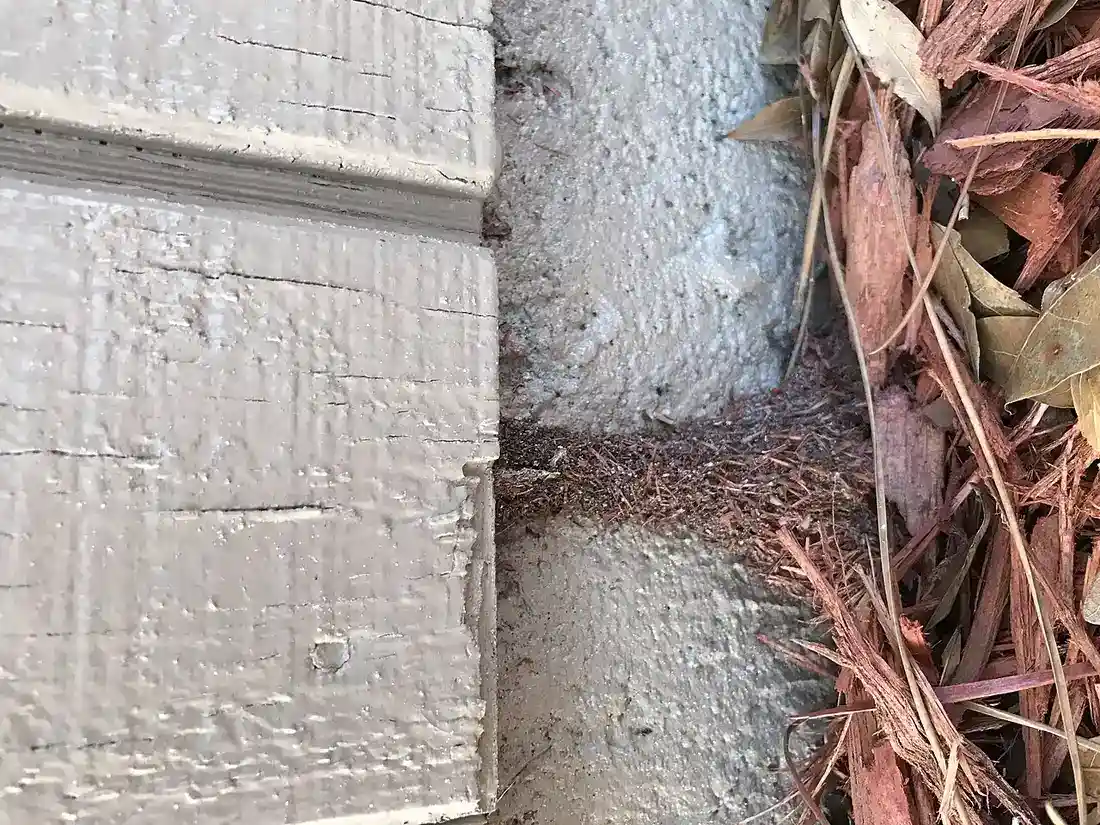
Different termites sign their work differently: mud for subterraneans, pellets for drywoods, blisters and carton for Formosans.
Problem: Different termites sign their work differently: mud for subterraneans, pellets for drywoods, blisters and carton for Formosans.
Solution: Read sign by species and freshness, photograph and preserve it, and let the map - not the scare - set the response.
When to call: Call immediately for indoor swarms, live insects in wood, or fresh mud and pellets appearing week over week.
Termites are quiet, but they are not tidy. Every colony operating in a Texas Gulf home leaves a documentary record - tubes, pellets, wings, blisters, galleries - written in the materials of the house itself. Homeowners who can read the record make calm, early decisions. Homeowners who cannot, either ignore an active colony for years or panic over a decade-old scar. This guide teaches the reading.
The core skill is asking two questions of every sign: which species wrote this, and is the ink still wet? Subterranean, Formosan and drywood termites sign differently, and fresh sign versus historical sign is the difference between a treatment plan and a monitoring note. Walk the house room by room, as the colonies do.
The city itself adds pressure. Corpus Christi is the Nueces County seat and the Coastal Bend's hub, with neighborhoods that range from 1900s blocks near the bayfront to subdivisions still being framed at the brush-country edge - and every era of housing has its own pest profile, from drywood termites in old eaves to field rodents at the construction frontier.
Start at the soil line. Subterranean termites commute in mud tubes - pencil-width earthen tunnels running up foundation walls, piers and plumbing - because they desiccate in open air. A tube is a road, not the colony; break a section and check in a week: a rebuilt tube means active traffic, and live workers inside a fresh break settle the question on the spot. Old tubes, dry and crumbling, may be history - but history at a foundation is a standing invitation, not an all-clear.
The yard writes its own record: swarm castles in spring soil, carton in tree cavities, mud sheeting on stumps, fence posts and landscape timbers softening at the ground line. A Gulf yard with termite sign in three features is telling you the pressure around the house is established; the house itself then gets read with extra care.
Bathrooms and kitchens come first, because water writes the invitations. Subterranean damage hides behind tub surrounds, under leaky valves and in the wall below a window that sweats - soft baseboards, paint that bubbles along a plumbing wall, flooring that feels spongy near the tub. Drywood signs concentrate instead in the dry architecture: frass pellets - tiny, ridged, salt-and-pepper granules - sifting from pinholes in door frames, window trim, picture frames and furniture, piling in little cairns below the gallery.
Living spaces add the Formosan chapter: blistered or dimpled paint on walls and ceilings where a carton nest humidifies the drywall from behind, hollow-sounding studs, doors and windows that suddenly stick as framing loses substance. And in spring, every room contributes the same evidence at once: wings on the sills and swarmers at the lights - shed by the thousands, identical pairs of wings, the colony's annual census taken involuntarily.
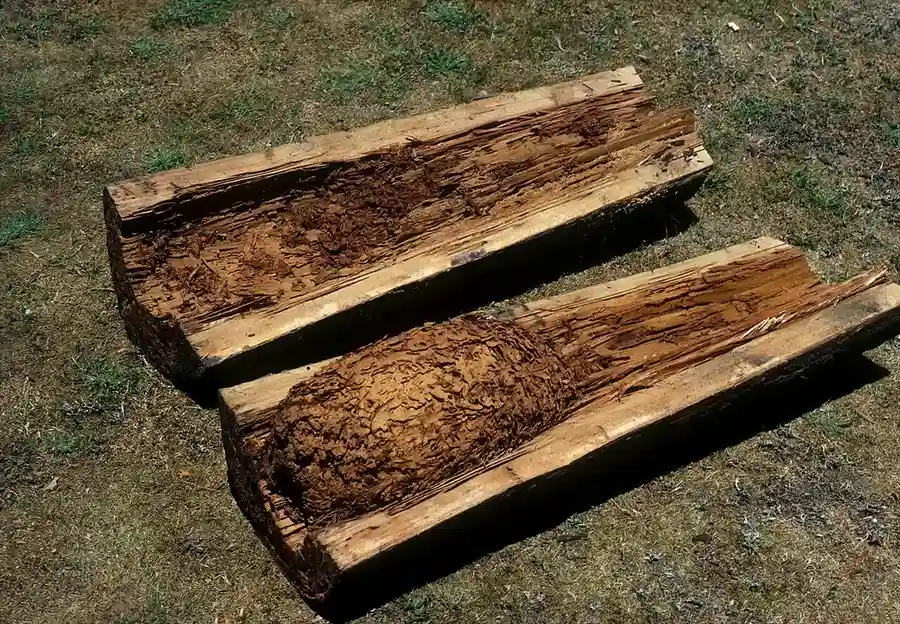
The attic is the library. Look along the bottom chords and the eaves for mud tubes climbing from the walls below, frass on the insulation under drywood galleries in the rafters, and the papery honeycomb of wood eaten to the paint film. Gulf attics run hot enough that drywoods favor them, and the AC platform and its condensate line create the moisture pocket subterraneans commute to.
Read freshness up here with your hands: frass that is pale and sharp-edged is new; frass greyed and dust-mixed is old. Mud that is moist and dark is a live road; mud that powders is a ruin. Photograph with a coin for scale and a note of the location - an inspector given your photo map starts the job half done.
Monitor-level findings: old dry tubes with no rebuild, a single season of pellets under one frame that has not recurred, historical damage found in a remodel with no live sign. These go on the record, get check dates, and fold into the annual inspection. Treat-level findings: live insects anywhere, fresh mud rebuilding, growing frass piles, swarmers emerging indoors. These start the inspection-and-treatment sequence now, because all three local species bill by the month.
The one mistake to avoid is cosmetic repair as a response: painting over blisters, patching tubes, sweeping frass weekly and calling it handled. Cosmetics erase the documentary record while the authors keep writing. Whatever you find, preserve it until it has been read by someone who reads it for a living - the sign is the diagnosis, and the diagnosis is where the visit earns its keep.
Termite swarms are scheduled announcements, and the Gulf calendar has three main acts. Native subterraneans swarm on warm days from late winter into spring, often after rain, in daylight. Formosans take the late-spring evenings, at dusk, in their thousands. Drywoods swarm in late summer and fall, in smaller, lazier flights from the infested wood itself. The species, season and hour of a swarm narrow the diagnosis before an inspector ever kneels down.
Keep a household swarm log - date, time, where, how many, specimen jarred. Across two or three springs, the log becomes the property's termite biography, and changes in it (earlier, bigger, moved indoors) are exactly the signals inspections are for. Few homeowner records pay for themselves as reliably as this one.
Drywood termites do not respect the boundary between house and contents: antiques, picture frames, hardwood chairs and stored books all host galleries, and furniture is the species' favorite moving van - more drywood infestations arrive in a delivered piece than fly in through a window. Frass under a beloved piece is therefore a fork in the road: the piece can be treated (fumigation, heat, localized work depending on value) or isolated and retired, but it cannot simply be moved to another room and forgotten.
Buy and inherit with drywood eyes in Corpus Christi: inspect secondhand hardwood outdoors, look for the pinholes and pellet piles, tap for the hollow note. The coast's estate-sale and antique economy is delightful and is also a termite distribution network. A five-minute inspection at the driveway is the simplest drywood treatment ever devised.
A termite inspection is a translation exercise: the inspector converts mud, frass, wings and moisture readings into a document that buyers, sellers and lenders can act on. That is why the report's value is in its specificity - species, location, extent, and the conditions that invited it - rather than a bare verdict of 'termite activity found.' Two houses with the same verdict can be five figures apart in what the finding actually means.
That is the service side of this guide's problem. When you are ready, the Termite Inspection page carries the process, the coverage by neighborhood and the number to call.
Test-break one and date the re-check.
Soft baseboards, bubbling paint, spongy floors.
Check trim, frames and furniture for frass piles and pinholes.
Preserve sign for the inspection.
Foundation tubes break-checked and dated this season?
Baseboards and floors around plumbing sounded and pressed?
Trim, frames and furniture checked for fresh pellet piles?
This year's swarmers jarred, dated and located?
Eaves, tubes and frass on insulation read on the annual climb?
Inspection scope follows the sign: a single old tube is a finding inside a standard inspection; blistered walls, indoor swarms or carton in a tree expand it into Formosan protocol with wall and tree work. Damage assessment scopes further still - probing and sounding the named members - because the treatment plan and the repair plan both price off what the inspection measures, not what the sign suggests.
Inspectors read sign with instruments the eye lacks - moisture meters that find the wet wall behind the dry paint, probes that measure what sounding suspects, and the pattern library of a thousand Gulf houses that tells fresh from historical at a glance. A professional inspection also converts your photographs and swarm log into a dated, located record that treatments, repairs and real estate transactions can all stand on.
Patched tubes, painted blisters and swept frass destroy the diagnosis. Preserve first, repair after the reading.
Gulf homes regularly host subterraneans in the walls and drywoods in the trim simultaneously. The sign that gets all the attention is not always the one doing the damage.
Breaking tubes feels productive and accomplishes surveillance at best. The colony is elsewhere; the tube is its road.
Every local species bills monthly. The annual rhythm is what keeps the inspection a report instead of an excavation.
A house writes its termite story continuously, in mud and pellets and wings. Homeowners who learn the script stop being surprised by the plot: the small signs get logged, the fresh ones get read by a professional while they are still small, and the annual inspection ties the chapters together. On the Texas Gulf, that literacy - not luck - is what separates the line item from the renovation.
Rain hatches dormant marsh eggs and fills every container in the yard; biting peaks about a week after the storm.
Read the GuideTreatment fails on preparation, not chemistry - the prep list is the program's first and most important visit.
Read the GuideTermite swarmers shed equal-sized wings - all four the same length - and have straight antennae and a uniform waist. Flying ants have two wing sizes, elbowed antennae and a pinched waist. Either deserves attention; a jar of specimens at the inspection removes all doubt, and the species decides the response.
Interested, not panicked. A tube is a road a colony built to something - find out whether it is active (break-check) and what it leads to. Single exterior tubes with no interior sign often resolve to monitoring plus perimeter work; tubes multiplying along the foundation are a treatment conversation.
Drywood galleries pulse with activity and can pause - and the pellets only fall when the gallery is being cleaned out. A paused pile is not a vacated colony. Mark the spot, date it, and let the next seasons and an inspection decide; drywoods are a monitoring game even after treatment.
Sign tells species, location and activity - it does not measure the wood that is gone. That measurement is the inspection's probing and sounding, and it is why treat-level sign should not wait: the gap between 'frass in the trim' and 'the header is honeycomb' is exactly what inspections exist to close.
On the Gulf Coast, old damage with documentation - treated, repaired, monitored - is a common and manageable finding. Undocumented damage with any live sign is the problem. The inspection report is what separates the two, which is why transactions here run on it.
One call connects you with a pest control professional serving Corpus Christi and the Coastal Bend - inspection, treatment, exclusion and prevention.
📞 Call Now